
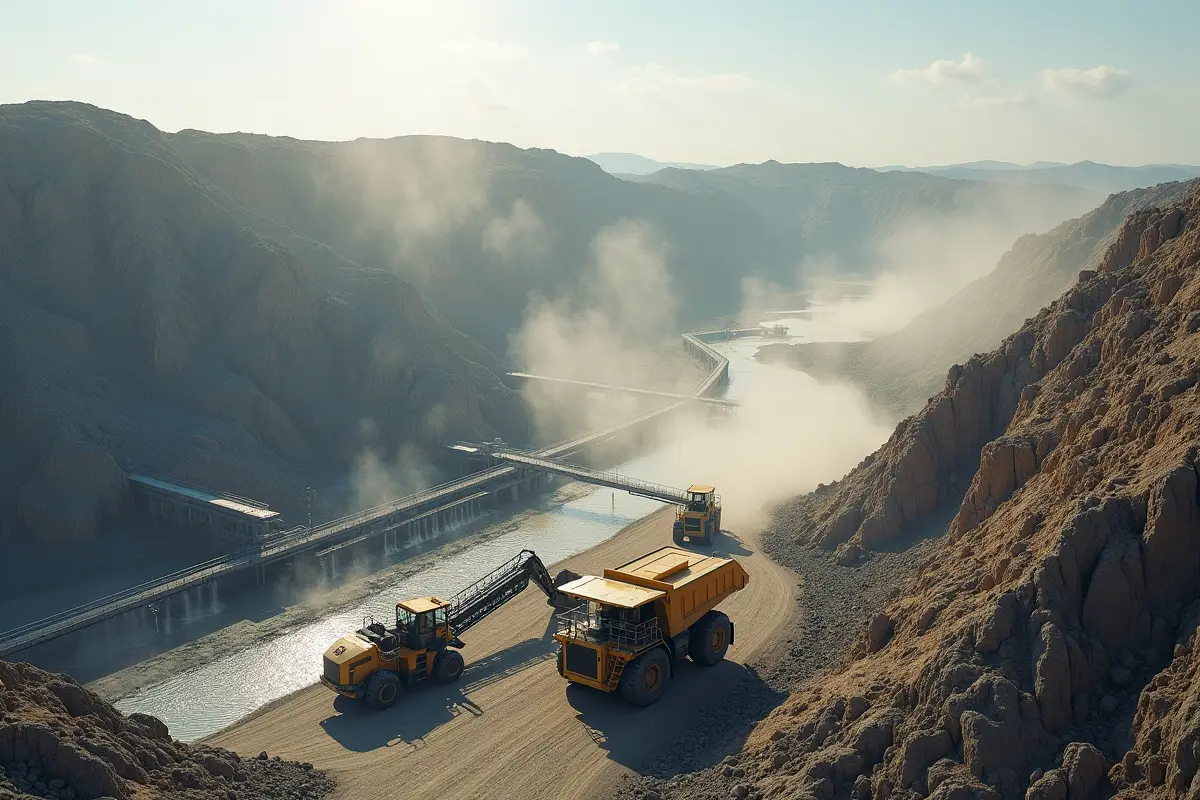
What Actually Controls Dust at High-Volume Mining Operations
At high-volume mining operations, dust generation overwhelms any typical means of dust control. It’s not that a little dust happens here and there—these operations process so much material that the generated dust clouds limit visibility, damage machines, affects employee health, and gets management into trouble with regulators. The only means of putting it in its place are systems meant specifically for industrial generation.
It’s not enough to keep it from swirling about or capturing it once it’s out. It needs to be contained before it ever becomes airborne, trapped at different points in the production process, and without halting everything otherwise it creates even more problems (too much moisture = mud everywhere).
Where Dust Comes From
Most dust is created at transfer points—where material moves from conveyor to conveyor or backhoe bucket to truck. Even tipping at a stockpile results in the release of fine materials as they drop and collide, allowing incredibly minute materials to become airborne. The higher the drop and the drier the material, the worse the situation.
Crushing and screening create astounding amounts of dust. As material is pulverized to smaller fractions, the particles become so fine they are immediately released into the air. The finer the material, the more dust created.
Haul roads are another major contributor of dust as large trucks travel unpaved roads and kick particles into the air. Wind exacerbates the problem and pushes additional dust across operations and off-site, creating operational concerns, as well as public relations concerns.
Stockpiles create air quality issues as high winds push materials as particulates but loading and reclaiming occurs with significant frequency, too. The bigger the pile and the drier it is, the worse the condition.
Where Dust Is Controlled Before It Begins
The best dust prevention is created at the source. Professional mining dust suppression systems employ strategically-placed watering applications at transfer points, crushers, etc. But this isn’t a random spray; such systems are engineered for optimum suppression with minimum requirement.
Atomization mist systems project small water droplets that latch onto particles and pull them down. Droplet size matters. Too big and they go around; too small and they evaporate before they get to where they’re going. High quality systems create a variety of sizes dependent upon what type of dust is being suppressed.
Chemical additives make water more effective. Surfactants reduce surface tension on water so that water penetrates and soaks particles down. Binding agents keep particles from coming back up into the air after they’re down (after they dry). This drastically decreases water necessity.
Suppression can be coupled with enclosures as well. Partial enclosures around crushers or transfer points maintains collection but allows for access to machinery—especially coupled with negative pressure collection systems that suck air in those general directions.
Dust from Haul Roads
Haul roads create some of the worst concentrations of dust within operations. Water trucks are an alternative, however, they’re labor-intensive and when a site operates in extremely hot or dry conditions, evaporation happens rapidly, leaving operators battling dust until their next application.
Chemical suppressants sprayed on road surfaces last much longer. Some bind surface materials (like dust compactors), others hold moisture, some do both. If applied effectively, these suppressants reduce frequency of watering.
Haul roads need proper construction as well. Grading, drainage and compaction create conditions where material isn’t disturbed as often which means less potential for dust generation and longer maintenance of effectiveness.
Dust from Stockpiles
Wind fences reduce aerial velocity across stockpiles so wind erosion doesn’t pick up and transport particles. Wind fences are passive systems that are always on without any kind of activation.
Surface crusting agents create hard tops so that wind erosion doesn’t occur. This works effectively for those materials just lying there for a while; it will crack only if the material is activated which protects it while inactive.
Automated spray systems can be installed for stockpiles in which materials get reclaimed based upon wind or humidity conditions. These don’t activate all day long; instead, they operate as needed.
From System Integration to Automation
At modern operations integrated dust control systems work across multiple setups throughout a site. Centralized monitoring can determine conditions in multiple areas and activate suppression automatically—with wind speed/direction, humidity levels, and where established dust control systems already detect theirs.
Automatic systems react faster than humans can; constant management keeps effectiveness; when wind picks up or gets hotter more suppression is needed; when humidity rises less water is needed; this automatic management keeps controls consistently effective.
Water Management Realities
While effective dust control uses significant amounts of water, too much moisture creates problems—mud, traction problems for machinery and personnel; excessive moisture creates reclaim issues and processing complications.
Water recycling systems provide perfect solutions where processing plants exist on-site as water that gets collected gets filtered and reused as part of a closed system for dust prevention. This drastically decreases general freshwater demand.
Where water conservation is critical either dry suppression methods or ultra-low-water solutions come into play; foam systems are best with a fraction of application for water or dry fog.
How To Measure If Dust Control Works
Dust control works when levels are within parts per million for regulatory compliance and health standards. Assessment systems measure effective concentrations in breathing zones as well as site boundaries instead of relying upon how visible (or invisible) clouds are.
Real time measurement helps determine issues immediately. Historical assessments help make performance better over time. Monitoring equipment shows if they have dust control performance—as less particulates mean better operational efficiency and longer machinery life span.
What It Actually Costs
Dust prevention measures cost operators significant money upfront but ineffective measures cost them far more down the line—from health claims with significant liability to regulatory fines that shut down operations while performance measures are put in place on-site.
Damage to machinery forced to work through dusty conditions diminishes lifespans exponentially and replaces bills skyrocket.
Quality of life issues also come into play; if residents complain about dust from problematic operations with open stockpiles or breach dust regulations because no proper mitigating measures took place, legal battles await. On-site dust prevention is better for everyone involved.
In fact, when all these costs add up—with health issues curtailed, damage reduced, regulatory compliance established, no neighborhood complaints—it shows that when effective dust control systems are put into place at high-volume mining operations where serious dust generation occurs 24/7/365, they’re needed to pay for themselves.