How to Improve Back-of-House Efficiency in High-Volume Retail Environments
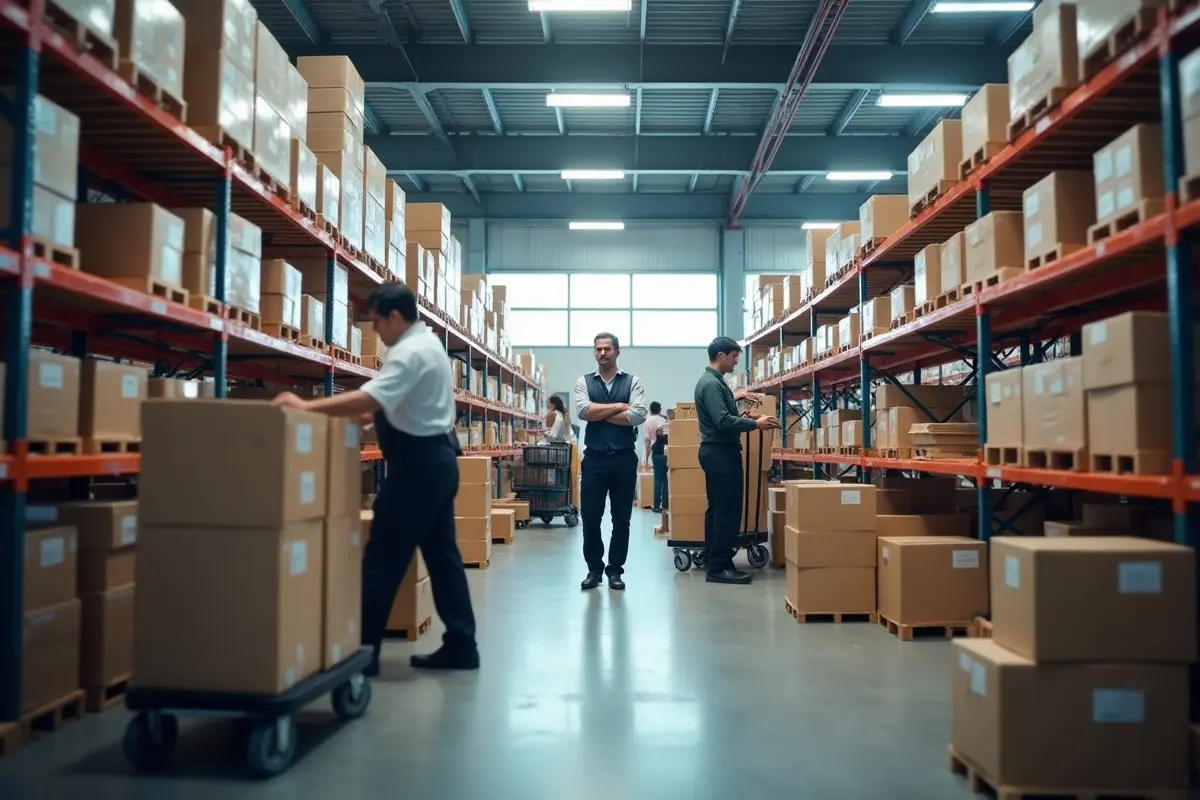
Efficiently running back-of-house operations in high-volume retail can really make or break your business. The areas where your employees receive, unbox, sort, store, and pick merchandise are the lifeblood of your operation. Whether those areas are an orderly, safe, and productive hub of activity or a chaotic bottleneck of injury and inefficiency is largely up to the systems you have in place to manage risk and keep your people safe.
Why Ergonomics And Speed Are The Same Problem
Many retail managers consider operational throughput and worker safety to be related but separate budgets, separate conversations. One sits in operations; the other sits in HR or compliance. That split has a real exacerbating impact, in truth.
Injured workers automatically slow down; hurt workers who are taking pain pills to get through their shift slow down, too. Workers who are fatigued in a physical sense from repetitive lifts take longer to make decisions. They work slower to try to stay safe.
The problem is that things are always easier to measure than actions. It’s easier to count the mistakes workers are making in an out-of-the-way space than to identify the root cause of why high-turnover employees aren’t putting safety procedures in place. Safe lifting and movement habits are tough to build when you keep finding yourself in awkward crouching positions, for example, because the item you need is crammed in between something else and the wall.
Mapping The Layout Before You Move Anything
The best way to improve performance in the back-of-house operation is by first understanding the reality of what is actually happening in that space. Not what the theoretically available physical space says, but how workers are physically interacting with their space, using their feet and their hands, over the course of one full receiving cycle.
The 5S methodology provides a useful blueprint here. Sort. Set in order. Shine. Standardize. Sustain. The first two steps do most of the heavy lifting when it comes to weeding out inefficiency. Sorting means taking anything that isn’t a move load off the table – returns awaiting processing, empties, display equipment for discontinued lines. Set in order means establishing real transit zones with physical floor markings that clearly define the boundary between the high-velocity receiving area and long-term storage.
That boundary makes more of a difference to incoming efficiency than most managers could ever imagine. When a delivery arrives and there isn’t a designated route from the door to the staging area, workers make do. They work around the obstructions, make three trips with a third of a load instead of one trip with the whole, or simply lay cartons in the closest and unofficial “out-of-the-way” spot that quickly becomes an obstruction to the next worker. Floor markings aren’t just for fun – they’re a choice made once that removes hundreds of decisions from every shift thereafter.
Traffic flow in stockroom corridors also needs to account for both pedestrian movement and equipment. Designate lanes. Make it clear where trolleys and hand trucks operate and where workers on foot move. In tight spaces this feels unnecessary until the first near-miss between a loaded pallet trolley and someone carrying a box at head height.
Profiling Your Stock Before You Assign Shelf Positions
Not all products are created equal and need to be stored equally. Profiling your SKUs – categorizing your stock keeping units by physical size, weight, and the number of times they’re pulled – directly impacts the amount of labor per manual touch your team expends per shift.
The rule here is the ergonomic golden zone: the height range between approximately knee height and shoulder height that minimizes the physical demands of lifting and placing an object. Heavy items and fast-moving stock should live in this zone. Storage below knee height adds to the complexity of a lift by requiring a worker to bend while supporting a load. Storage above shoulder height compounds risks by making workers reach overhead while likely losing their center of balance.
Put your highest-velocity SKUs in the golden zone and – surprise! You’ll reduce your injury risk, but you’ll also reduce the proper task time as workers can easily execute their lifting movements and put the item back in the optimal picking position. Over a full receiving cycle, you can save enough time to account for almost an entire new worker without any of your current workers lifting a single finger or working a single second harder or faster.
Equipping The Team With The Right Mechanical Aids
Manual handling doesn’t mean lifting everything by hand. It means any physical task involving the movement of a load – and the goal is always to reduce the physical force the human body absorbs in completing that task. Equipment is how you do that.
The mistake many retail operators make is treating equipment as generic. One type of trolley for everything. A hand truck that gets used for everything from small cartons to large appliances because it’s the one thing available. That approach fails because different load profiles require different mechanical solutions. Using specialized, industrial-grade trolleys and hand trucks designed for specific load capacities is what actually reduces the physical force required to move heavy stock from the loading dock to the retail floor – not just any trolley that happens to be sitting in the stockroom.
Multi-tier platform trolleys work well for mixed small items that would otherwise require multiple hand-carry trips. Heavy-duty hand trucks with braking mechanisms are the right tool for large appliances or dense cartons where momentum and gradient are real control challenges. The specificity isn’t pedantic. The wrong tool creates exactly the kind of awkward, high-force movements that cause musculoskeletal injuries.
Body stressing – the category that covers manual handling injuries, lifting strain, and repetitive strain – accounts for approximately 36% of all serious workers’ compensation claims (Safe Work Australia). In retail and warehousing, it’s the single largest source of occupational injury. Equipping workers with task-specific mechanical aids is one of the most direct interventions available to reduce that exposure.
Streamlining The Receiving Bay
The loading area of a receiving bay is a critical piece of the back-of-house operations. Shipments come all at once, quick decisions must be made as to where it should go, and if processes are unclear, items get put away – often in the way of the next shipment’s pallets.
Poor strategies don’t just slow down this critical process. They also introduce unnecessary costs into your labor model.
Cross-docking provides an effective method for dealing with items that are in high demand. Instead of routing every item through the stockroom racking system, low storage or high-velocity items can be sent directly to the sales floor from the delivery truck. This minimizes the storage time and manual handling of items – the more times an item is picked up, set down, and moved, the more work is involved, the longer it takes for the customer to receive the product, the more susceptible the product is to damage.
Likewise, low- or no-touch strategies reduce the physical movement of these products. Low to no-touch items would go onto the truck and come off again without ever having the lift readjust its forks. Each additional touchpoint (and additional pick up, put down, and move is a touchpoint) adds an opportunity for labor, and an opportunity to lose productivity.
Shifting From Safety Training To Physical Coaching
Most retailers provide some training on manual handling. The issue isn’t whether the principles are understood but how they’re applied day-to-day in the stockroom. If your training is a video watched once at onboarding time, an acknowledgment form with a scribbled signature, and a vague verbal reminder during orientation, then it’s not just your ergonomic training that’s badly executed. It’s time to think about an alternative that’s more active, more physical, and more on-the-job.
For instance, when you show a worker how to lift safely, do you do it with a trainer standing there in the heat of a real task, or with a mouse and a virtual employee in an air-conditioned office? Active physical coaching enables far more effective learning. It’s like learning to shoot a basketball – you can read about elbow position but having the coach there to move your arm and show you the follow-through makes all the difference. The same is true when you’re dealing with the balance of a loaded hand truck on a ramp, or the shared weight load of a team lift on a carton of your heaviest product.
Participatory ergonomic assessments take that idea further. The people on the floor each day moving the stock know where the frustrations and bottlenecks are. They know that the new shelving layout has doubled the number of turns, but a slightly different layout would have avoided the issue entirely. They know that taking two separate trips with a trolley instead of one doubles the time but moving the frequent delivery line two feet closer would speed things up. Managers who get the workers involved in spotting these issues get vastly better intelligence than even the best ergonomic consultant wielding a clipboard.
Scheduling Movement To Match Store Traffic Patterns
Heavy stock movement during peak customer hours creates a collision of competing demands on the same physical space. Workers moving loaded equipment through areas with customer traffic slow down, take longer routes, and take more physical steps per task. The back-of-house pressure doesn’t stop because the floor is busy.
Off-peak replenishment scheduling resolves this by separating the peak periods. Moving the bulk of heavy stock during low-traffic hours – early morning, post-close, or during documented quiet periods in the trading day – gives back-of-house teams clear corridors, fewer interruptions, and a safer working environment. Congestion-related accidents between workers and equipment spike during transitions between back-of-house operations and customer-facing activity. Reducing those overlaps reduces the risk directly.
Mobile inventory technology supports this by letting workers plan efficient picking paths before they start moving. Handheld RFID scanners and real-time inventory software mean fewer unnecessary trips across the stockroom to verify a location or check availability. Over a full shift, reducing wasted footsteps translates into reduced physical fatigue – which is where pace erosion begins.
The Compound Return On Getting This Right
Every single one of these is a direct operational return and a direct safety return. It’s the same investment, not a little bit for profit and a little bit for safety. A stockroom with clear transit zones is faster and safer. Stock stored in the golden zone is faster to pick and less likely to be the cause of a strain injury in the distribution center. Workers with task-specific equipment move loads with less effort and in less time.
High-volume retail moves too fast for the back-of-house to absorb inefficiency quietly. The costs show up in replenishment delays, in overtime, and eventually in workers’ compensation claims that are both expensive and preventable.